Reviews May Contain Minor Spoilers

If you're reading a review you should expect to hear some spoilers. I try to keep them to a minimum though.
Showing posts with label Mary Shelley. Show all posts

Monday, 7 October 2013

Mary Shelley's Frankenstein (Review #100)

For the 100th review, we're going back to the beginning. Both my first review and my first Frightening Fiction were about Frankenstein, so it's high time I review:

Mary Shelley's Frankenstein (1994) is considered the most faithful adaptation of Frankenstein; or, the Modern Prometheus.

Impressions
Captain Robert Walton leads his men toward the north pole, but crash into an iceberg on the way there. Out of the ice a man runs and joins them. After he is inside the ship, the man tells of how he was once Victor Frankenstein and came to create his Monster.

This is a case of too much action being put into a story that isn't meant to have much. The film puts all the pieces in place from the novel, but doesn't spend any time with them. It rushes through most of the character development and story. It even has this strange, often obsessive fire motif, that doesn't amount to anything. The fire motif really gets weird in the scene as though fire is just like napalm. There is also a curious amount of forced conflict between Victor & Elizabeth and Victor & his teachers when they should have focused on Victor and the Monster. Plus, there is a significant change in the plot that could have been really interesting, but it ends far too quickly and incredibly unsatisfactorily.

Our Hero
Victor Frankenstein is a decadent playboy who becomes obsessed with restoring life after his mother dies. Director Kenneth Branagh plays the title character, which you might think would mean more screen time, but sadly no. The character's drive to create life is understandable, but his passions get mixed and he becomes truly perplexing by the end.

Bridal Observer
Elizabeth is Victor's adoptive sister and lover. It is a little bit of squiggly territory, but it was more common back then and it was in the book. She is given an expanded roll, which does more accurately reflect how she she might feel about her circumstances. However, this is the cause of many of Victor's weird emotive turns. Since, though her actions have changes, Victor is still riding the rails of the novel's plot.

Unreasonable Foe
The Monster is actually pretty awesome when he gets to act and not get into supervillainous fights with peasants. Robert DeNiro gives the monster a sense of gravitas that I sense was really not in the script. His quiet moments are some of the best parts of the film and he actually gets somewhat close to his goal. Unfortunately the mystery surrounding him never gets built up since we know what's happening to him at the same time as Victor.

Charged Atmosphere
Victor's lab looks a bit strange, but it goes with the birthing theme. The scenes on the ice are awesome and are really what I wanted with this movie. Sadly they are incredibly few. One of the spots that is rather distracting is Victor's childhood home. The entrance hall looks very strange, but I guess I don't know much about Swiss architecture. Also, the ship scenes at the beginning and end are passable, but nonsensical.

In the End
The film ends abruptly just like everything else. It tries to have a sympathetic end, but really just ends up with more fire.

Overall
The focus should have been split between Victor and the Monster. Instead it goes mostly to the overblown effects. Not that there's not some good stuff, mostly having to do with the creature and the aforementioned change from the novel. Unfortunately, it is faithful to its detriment. The plot doesn't flow naturally as it tries to include all the parts from the novel. Check it out if you enjoy Frankenstein.
6/10

Next time: More Hammer vampires!

Tuesday, 11 December 2012

The Last Man

Today I start my countdown to the end of the world! The Mayan calendar runs out on December 21st and I have a piece of Apocalyptic Literature for each day. All these contain at least some description of the change from old to new world (this is Apocalyptic not Post-Apocalyptic). I also decided to avoid zombies and skirted the line on aliens due to their more Halloweenish nature. We'll start off with the same author as my first Frightening Fiction: Mary Shelley.


Day 1
The Last Man (1826)
By: Mary Wolstonecraft Shelley

Impressions
Around 2073, Lionel Varney, a young man from a fallen noble family, attempts revenge on the king's son, Adrian. Through this the two become good friends. Lionel even marries Adrain's sister Idris. Lionel's sister, Perdita, marries an ambitious nobleman named Lord Raymond. The Last Man explores the lives of these five and to some extent their children. They face political upheaval and even a deadly plague that wipes out most of humanity.

Sorry about the vague summary, but this book is long. It is a dense 550 pages that takes place over 26 years. The middle drags on and the plague doesn't even do much until halfway through the novel. However; the beginning and the end of this book are stunning. The prologue itself is worth the read even if you don't read the rest of the novel. There are several glorious passages that illuminate the struggles of life and death. About 75% of the way through the novel Lionel reflects, "How intensely I then long to lie down beside her, to gaze till death should gather me to the same repose. But death does not come at the bidding of the miserable." This is how good some parts are. Unfortunately, Mrs. Shelley could have used an editor to cut the fat and some of the more useless characters and conflicts in the book.

This is also among the earliest science fiction novels, though it doesn't get into any science. Despite talking place in the late 21st century, people use 19th century weapons and modes of travel. Even the politics of England are only just getting past the monarchy and into the plutocracy stage. This can make it jarring especially to a modern reader, but I tend to think of it more a possible future setting made to explore social concepts. After all, this is before the science fiction genre was really established. H.G. Wells and Jules Verne weren't even born when this novel was published!

Our Heroes
Lionel Varney is our hero and the eponymous Last Man. His rise from commoner with noble blood to full nobleman reflects his later struggles. He's also built up so that we care about his family and those around him. He does get melodramatic sometimes, but this was written by one of the core romantics, so that's to be expected. Also interesting, is that he shares many autobiographical details with Mary Shelley herself.

Adrian is the former king's son and believer in liberal causes and freedom. He's a dreamer whose dreams and spirit are nearly crushed by the daunting reality around him. He slips into melodrama and feverish fits even more often than Lionel. Interesting, given the fact that he's based on Mary Shelley's husband, Percy.

Lord Raymond is an ardent supporter of the upper class and calls for a return to monarchy. He appears to be one of the antagonists when he's first introduced, but changes over the course of story. I'm not sure I even have to state that he's based on Lord Byron because it is made quite obvious.

Feminine Observers
Idris is Adrian's sister and later the wife of Lionel. She is caring and probably should be included in the heroic cast, but she really is treated more as an object most of the time. She develops more over the course of the novel and is a loving wife and mother.

Perdita is Lionel's sister who indulges in one of the more tempestuous romances of the novel with Lord Raymond. So much so that I found that her and Raymond got a bit wearing as the book went on.

Evande is a love interest of Adrian and Raymond. She serves mostly to drive melodrama and I think she could have easily been cut and the novel would have benefited from it.

Clara is the daughter of Raymond and Perdita. She doesn't get a lot of page time, but she stands out more than her cousins Alfred and Evelyn. She develops as a strong, independent and caring young woman. I think her role should have been increased.

Juliet is a plot device character we're meant to care about toward the end. She sort of appears in part three with a full backstory interacting with leads like she's been there the whole time. This is rather jarring after the unnecessary minor character descriptions during part 2. She was exactly like one of them except she kept reappearing. In this manner she seemed very forced in, right up to and including her over dramatic and out of nowhere death. If she had been properly integrated into the story she could have been a decent character, as it is, she could easily have been replaced with another lead.

Political Foes
The Countess of Windsor is Adrian and Idris' mother and the former queen of England. She is an antagonist during the first section when she tries to separation Lionel and Idris for her own political gain. Like many of the potential antagonists, she is somewhat redeemed by her actions at the end of the book. In fact, one of my favorite scenes is where she finally acknowledges Lionel as a proper son-in-law.

The Imposter is a villain who rears his head near the end and causes some problems for the last group of survivors. There are several parts during his section that Mrs. Shelley skips over that I found odd. As such he ended up more like some of the people mentioned in Part II, who just seemed unnecessarily brought in to fill up pages. This is a shame as he could have been an excellent overarching villain for most of part three.

Romantic Atmosphere
As is to be expected from any Romantic writer, Shelley is at home in describing the incredible bounty of nature. However; I think she surprised me most at her ability to descrive the ravages of war and plague. Ghastly visions of the apocalypse are rendered so that you can almost feel the mountains of corpses give as your knee presses into the rib cage of a greek soldier or a warm noxious plague infested breath making its way to your lungs. It does get a bit depressing with how much she summarizes some sections only to lavish others with attention. Most of the descriptions are brilliant though.

In the End
The end endeavors to be as positive as it can, but after the somewhat soul crushing right it seems a bit out of place. Right up until the very end Lionel is losing people and suffering. I think I almost would have been kinder without the somewhat forced happy ending.

Overall
With a little more focus on the core characters this book could have been even better than Frankenstein. Take a look at the brilliant prologue about how she got the idea for the novel which is brilliant alone. While reading I found myself scanning through some minor characters and the secitons about politics because they seem only to be brought up when convenient for Mrs. Shelley to make a point and tend not to advance the story. Yes, there is interesting historical context to be drawn for it, but it sometimes comes at the cost fo the characters. There is also a large amount of romantic melodrama that could have been cut down. These issues prevent the story from being the perennial classic that Frankenstein remains. Despite these shortcomings, The Last Man remains an interesting look at the politics and historic figures of Shelley's time.
6.5/10

This book is the first four freebies I'll be looking at on this list. Get it at Project Gutenberg!

Friday, 19 October 2012

Frankenstein; or, The Modern Prometheus

Night 1
Frankenstein; or, The Modern Prometheus (1823) By: Mary Wollstonecraft Shelley

Impressions
Victor Frankenstein is inspired by the alchemists of old and the power of lightning to try to create a man. He succeeds, but is so frightened by what he has created that he flees from it. He believes himself to be fine, until the murders start.

This novel is considered a classic of English Literature for many reasons. The Romantic respect for nature is very present. The horror comes from the unknown and unwillingness to trust as much as the heinous deeds that occur. The idea of appearance being paramount to trust is the most on the surface, but there is also the exploration into what makes a man. Beyond that we also see what makes on good and what makes one evil. There are some interesting homosexual undertones that can be read today, but I'm not sure were intended. Also, just to add to the weight of all that, there are some possible abortion/adoption issues beyond just the monster actually saying the word 'abortion.'

I haven't read Frankenstein for about five years. I first read it in a class on the Romantic period and found it interesting. However; at that time I was not the most mature and this re-read has shone a light on a lot of the text. This is the more commonly read 1823 revision. There is an earlier version with more malice put into the Monster and Elizabeth is Victor's first cousin (so incest).


Our Hero?
Victor Frankenstein whines a bit, yes, but he does provide an interesting character to follow for most of the novel. He has grown up in a life of privilege and fancy. He has the big dreams of a young man and the means to accomplish them. We get to see his motivations and his passions and then watch as everything is stripped from him due to his own cowardice and untrusting nature. He's not very sympathetic, and as his world collapses around him, it is his own hand that wrought the destruction.

Innocent Observers
Robert Walton is our frame narrator and is a much happier parallel to Victor. He has set out to explore the Arctic and discover the North Pole. Journeys north were a big thing at the time and the feeling Mary's description really captures the surroundings. He also gets the final confrontation with the monster. Despite getting very little page time, he brings a sense of majesty to the opening. He gets a little fanciful when talking about Victor, perhaps due to the Florence Nightingale effect.

Henry Clerval is Victor's childhood friend. He is the image of a younger Victor who made different choices. Victor mentions several times that he made bad choices in his line of study. Henry, on the other hand, is forced into his father's profession despite the desire to become an artist or a poet. Henry's exuberance helps Victor through several tough times and I love the fullness of character Henry is given.

Elizabeth Lavenza is Victor's bride-to-be and cousin and adopted sister... Times were different then. In the original 1818 version she was Victor's first cousin, but Mary removed the incest from her second draft resulting in a bit of an awkward origin for Elizabeth. She is an okay character, but we don't get to see much of her.

Alphonse Frankenstein is Victor's younger plot device brother, he exists mostly as a means to start the tragedy rolling.

Justine Moritz gets accused of Alphonse's murder. This is another example of how brilliant the Monster is and also how vengeful he became. She is the only one killed as a result of his wrath that he didn't know was connected to Victor. Of course, he also didn't kill her or really know for sure she would be killed as a result.

The Peasants' story is an interesting mirror to the Monster's story. It is pivotal to his development, yet still excluded or abridged in the filmed version leading to a lesser monster. They are the Monster's whole world, yet his reactions to their responses can be surprising.

M. Waldman has a minor. yet important role as Victor's supportive teacher. It proves that a great teacher can drive their student to do great and terrible things.

Reasonable Foe
The Monster is, of course, the best thing about the book. He described as having handsome features twisted so that they are ugly, detail is given to his muscles, white teeth and flowing hair, but he remains hideous. This is something that no visual version of Frankenstein has gotten quite right. Any time he is around everything becomes interesting. Even his simple back story with the peasants is made more interesting and dramatic by his presence. This book also leaves the Monster out of the spotlight until necessary to heighten suspense and make you see the world how Victor would have seen it. He has be come a classic and enduring example of the sympathetic villain.
Plus, the ultimatum he gives to Victor on the ice is the best part of the book, just read the excerpt:

"I expected this reception," said the daemon. "All men hate the wretched; how, then, must I be hated, who am miserable beyond all living things! Yet you, my creator, detest and spurn me, thy creature, to whom thou art bound by ties only dissoluble by the annihilation of one of us. You purpose to kill me. How dare you sport thus with life? Do your duty towards me, and I will do mine towards you and the rest of mankind. If you will comply with my conditions, I will leave them and you at peace; but if you refuse, I will glut the maw of death, until it be satiated with the blood of your remaining friends."

Sublime Atmosphere
The beauty of nature is nearly omnipresent in this tale and there is only one place near the end where an area is described as ugly.

In the End
More of Victor chasing the Monster from Geneva to the Arctic would have been nice. We are only given glimpses, but properly fleshed out it could have extended the book at least another 50 pages or even spawned its own book. Of course, wanting more is not necessarily a negative, but the chase isn't the most well written section on its own either. The tragic end of this tale is accompanied by an interesting speech by the monster. It is a bit anticlimactic, but it is certainly moving.

Overall
This is a book that you should read at least once in your life. It is a classic of literature and it holds up quite well today. There are a few instances of Victor being whiny and melodramatic, but let's be honest, you read it for the Monster.
10/10

You can get it for free on the Kindle or from Project Gutenberg in various formats!

Wednesday, 17 October 2012

The Eighth Doctor & Mary Shelley

As you may have noticed from some of what I pointed out in my Frankenstein reviews, I am big fan of Doctor Who. I felt that these horror based adventures featuring the Eighth Doctor traveling with Mary Shelley, the author of Frankenstein, were in line with the theme I have going. If you don't know anything about Doctor Who, I'd move on. But, if you're a fan of the old series or a new fan looking to check out some of the old Doctors, Big Finish's Audio plays are a fantastic way to get a feel for the 4th, 5th, 6th, 7th and 8th Doctors. Especially the Eighth, who only got one crappy (and I mean really bad) TV movie out of the series.

 Mary's Story By: Jonathan Morris

Impressions
It is a fateful night in Switzerland 1816 when Lord Byron gathers his guests to tell ghost stories. Out of nowhere an insane man appears calling himself Doctor Frankenstein. This is one part of a four story set, but it has nothing to do with the other three.

How can I not love that set up? It is the season I decided to start the Mary Shelley series. If you are new to the Doctor Who audios, this might be a tough one to tackle since it is not the nicest jumping on point to the Eighth Doctor or the audios, but I'd say give it a shot if you know about Doctor Who. It has some fun with the ideas in Frankenstein and the romantic writers themselves. Plus the descriptions are creepy in all the right ways.

Our Heroes 
Mary Shelley is our heroine and she is witty and determined. She sides with the deformed creature and even laments on the horrors inflicted on it. Naturally it references how Mary show how the Monster isn't evil in Frankenstein.

The Eighth Doctor doesn't get the most screen time and mostly serves as a catalyst to the story. I can't say too much without spoilers, but you get to know him a bit more toward the end.

High Observers 
Lord Byron and Percy Shelley do not come off well in this story. Mind you, they are quite entertaining in their drug induced fervor.

Sympathetic Foe
'Doctor Frankenstein' is both appropriately savage and sympathetic. He is the force of unpredictability and mystery he should be.

Gothic Atmosphere

The mansion ans surroundings are set up as stifling monsoon with special attention paid to Doctor Frankenstein's shack is superb.

Just the Beginning
The end is the same as all first companion stories and Mary's reactions to all the events make her just right. This is just the start to a beautiful partnership.

Overall
As I mentioned at the start, I'm not sure how easy this will be for a newcomer to the audios. Prior knowledge of Doctor Who is necessary, though I wouldn't say you need to watch the movie necessarily. It is only a dollar for the 25 minute episode, so it is well worth the risk! I loved it and would recommend it to any fan of the Doctor, new or old.
8/10
Buy it here from Big Finish!
You can also get the full 4 story set here.


The Silver Turk By: Mark Platt

Impressions
The Doctor attempts to take Mary on a simple trip to Vienna and gets there 57 years into her future. It is the 1873 Vienna Expo and a mysterious new invention is being shown: The Silver Turk!

One of the creepiest audios I've listened to in awhile and I chose to listen to it while jogging around midnight... This is one of those audios that makes me long for classic Cybermen stories. From the creepy nursery rhymes to the eery Cybermen murmurs to the booming voice of the marionette master, this audio's first three chapters will have you on the edge of your seat. The ties to Frankenstein are nice, especially since the Cybermen are quite comparable villains to Frankenstein.

Our Heroes
The Eighth Doctor starts out with his usual cheerful attitude, but once the Cybermen appear he becomes obsessed with discovering their plot. His passion and fear at what the Cybermen can do really drives the first three chapters with a frenetic intensity. His knowledge of the Cybermen's past evils also nicely parallel Mary's own view of the Monster as redeemable.

Mary Shelley is a superb companion. She has fantastic observations on the situation as well as the absurdity of time travel. They also have a bit of fun with her anachronisms, since they are in her future. Mary's compassion for the Cybermen reflects her eventual writing of the Monster.


Cautious Observers 
Countess Mitzi Wittenmeier is an interesting character and goes beyond her side character role in making us care about the secondary antagonist as well as a few other side characters. She takes more realistic and self interested actions that give the story a more human touch. 

The taxi driver is good for a few laughs and to make some observations on the scene. Though largely relegated to extra he does add tension to several scenes.

Nefarious Foes
The main antagonist, Dr. Drossel, one ups the even the Cybermen in this. He really amps the creepiness of this story. His menacing threats drive both the terror and the mystery. His voice alone is enough to convince you that he will kill you and that he will believe it is to make a better world.

The secondary antagonist is Alfred Stahlbaum. He ends up more as a plot device than anything, but his shared past with the Countess does make him ore interesting.

The Cybermen, Brahm and Graham, should be the main villains, but I really ended up feeling for them by the end. That said, they are terrifying through the first three chapters of the audio. Their voices have just the right amount of heartless resonance to disturb. Also, the fact that they aren't in proper working order drives a desperation that makes them more threatening than all the Cybermen in the new series combined.

Chilling Atmosphere
The Vienna exposition is beautifully rendered with a joviality that belies the sinister happenings surrounding it. The mansion attack and the the church scene are brilliantly realized with the clacking of wooden feet and the sounds of the storm. The music is suitably timed to make this audio as scary as possible.

In the End
The only problem with this adventure was the ending, which is the problem of most creepy stories, once you know what's going on, it loses its edge. There are still satisfying character wrap ups, but for the most part is by the book. Though, there is a somewhat amusing cliffhanger.

Overall
This is a strong audio and I think it is great for any Doctor Who fan and even some horror fans.
9/10
 Buy it here from Big Finish!

The Witch from the Well By: Rick Briggs

Impressions
The story starts with men removing a stone from a well and a witch popping out and killing people. It is later split into two timelines: the 17th century and the present-ish (they have the internet and cell phones). The past story follows the Doctor takes up the most time, is the most convoluted, and has the most prejudiced characters. The present follows Mary and Aleister trying to escape the crazed witch.

Our Heroes

The Eighth Doctor and Mary, on their second outing together, are kept apart nearly the entire time. Given that a highlight of The Silver Turk was their interaction, I found choice stupid. There are a few good lines, but they just fall on the deaf ears of the supporting cast. While the main plot isn't interesting, there are slices of Mary being tempted to learn about her future. These scenes along with the interaction with her Byron-loving pseudo-companion are the best stuff this story has to offer. The Doctor also gets a few decent scenes of slipping past the guards, but spends most of his time trying to figure out what the heck is going on.

Idiotic Observers
Finicia and Lucern are twins who Mary rescues from the witch. They are obnoxious and too smart for their own good. Though, Mary slaps Finicia and that is hilarious.

Master John Kincaid, the witch pricker, could be considered an antagonist, but he really isn't. He is a very stereotypical coward with power. I was waiting for him to do something more than give orders. Don't hold your breath.

Squire Claude Portillon is a nobleman who has some misgivings about burning the witch. The problem is that he is so wishy washy that he has little agency of his own and ends up getting lead around by the nearest strong personality. His own kids manage to order him around.

Curious Observers
Anges Bates is a woman convicted of witchcraft, but is she really a witch? She play the madwoman really well and has some interesting, though badly explained, powers.

Aleister Portillan is a modern fan of Lord Byron and my favorite of the supporting cast. His conversations with Mary got me through this story and I really wish it had been the entire story. He also takes some shots a Byron's attitudes and how they reflect on real people.

Irritating Foes
The witch doesn't do much aside from kill people, though she is a menacing presence. More menacing than the other adversaries.

The Viriyans are some of the most stupid and nonsensical villains ever. Several of their actions don't make any sense: cooperating with the Doctor at all, not just killing everyone to get their objective, all of their actions in the past's ending. Terrible.

Clear Atmosphere
In the past we have a nicely set up town, fores, and mountain which we alternate between. The town is set up easily enough and transitions from place to place are well handled. The present is also handled fanatically between the well, the forest and Aleister's home. The witch's massacres are appropriately chaotic, but not so much that you get lost in them.

In the End
I strongly dislike Doctor Who witch stories (Yes, even classic Doctor Who's The Daemons). That being said I do have practical reasons for disliking this one. Witch stories are often about blind prejudice. This topic that can be interesting, but when most of the cast is ignorant your heroes just end up talking to unrepentant brick walls. In this story there are at minimum four of this type of characters. None of them are terribly interesting and all of their reasons for their prejudices aren't based in fact or logic. Especially the two main villains who are villains because every said they were. So they figure why the heck not? I realize this is trying to be a parallel to Frankenstein's Monster become vengeful because of how others treated him, but one Monster does not compare well to an entire civilization. Plus we don't get more than a gloss over the species history in this audio whereas a least twenty percent of the novel shows us the Monster's back story. Ugh.

Overall
Honestly, I'd skip this one. It isn't scary, it isn't very funny, it doesn't give you any insight into the subject nor characters and it isn't that interesting.
4/10
Buy it here from Big Finish.


Army of Death By: Jason Arnopp

Impressions
The Eighth Doctor and Mary Shelley find a populace in the grip of fear after a terrorist attack blows up one of their major cities. The strange thing is that skeletons of the dead are marching toward the other major city, killing everything in their path.

This one was definitely more sci-fi than horror, but I think works. I would have liked the terror of the skeletons and the ghostly voice that accompanies them played up more. Also I have to admit I was pleased to have skeletons rather than zombies. I know the difference is minimal, but good skeleton stories are quite rare.


Our Heroes
The Doctor and Mary manage a bit more time together in this adventure, which is nice, especially after the last one. Though I still don't think it was enough time, as they were separated from most of chapters two and three.


The Eighth Doctor is in fine form managing politicians, killer skeletons and flybots with ease and humor. He even has a touching moment with Mary at the end about dealing with trauma.  That is the strongest part of this story and makes me wish that they'd have more time together even more.

Mary is forced more to the background during chapters two and three, but she manages to shine in the light she is given. Once again she empathizes with the baddies and speaks for them. There is a hinted romance with the Doctor, which is becoming cliche, but that plot line seems to resolve itself at the end.

Strange Observers
Nia Brusk is an escaped prisoner accused of murder. She has a redemption/revenge arc that flows nicely and should have been more prominent through chapters one and two.

President Vallan and Lady Meera are the leaders of the remaining major city. Their most interesting aspect involves Vallan covering for Meera, but that subplot gets about one line. The rest of the time they are being pushed into doing others' bidding.

Vile Foes
The Skeletons are most terrifying at the beginning. I wish their terror had remained until late in the third chapter, but they are used well overall.

The Bonelord ends up being more comical than threatening which is a shame because he had a lot of potential. He ends up being more scary as a disembodied voice than a skeletal giant.

In the End
This adventure also has a complicated, if a bit nonsensical, political plot. I though this was probably the weakest aspect, though I did like the storyline involving Nia. It also shows the stupidity that people allow after a terrorist attack, as an American this theme hits especially close to home. Unfortunately they only glanced the surface of these themes.

The Doctor and Mary's relationship really needs to be expanded in future releases. This contains an after closing teaser about Mary wanting to go back to her own time, but the time of this decision is left ambiguous. I personally want more the Doctor and Mary since it seems like there is a lot more to cover. Also, I'd like to see them focus on more of Mary Shelley's works than just Frankenstein. In Mary's Story the Doctor did mention a race that they haven't encountered, so the afterward could be set in the future.

Simple Atmosphere
The setting for this isn't complex, but is is easy to follow. The cities and forest between them are set up nicely. You get a good feel for the destruction caused by the bomb. Also the skeleton attack scenes form easily in the mind.

Overall

I'd say its worth a listen, especially for Eighth Doctor and Mary Shelley fans.
7/10
Buy it here from Big Finish!

You can also check out a more complete set of Doctor Who and other reviews at Doc Oho Reviews.

Tuesday, 16 October 2012

Frankenstein Finales - Hammer Horror -

Frankenstein Must Be Destroyed (1969) could be a sequel to the second or third hammer film, but seems more like a retread of the first two.

Impressions
Baron Victor Frankenstein must perform brain surgery to get a secret from a former colleague's head. To do so, he blackmails a corrupt doctor and his wife into helping with this experiment. With the police hot on his trail, Victor takes more and more chances and endangers all those around him.

It think this film was trying to up the terror level from previous films. The film opens with a murder followed by a fight scene where a frozen body is broken from its case and a bloody severed head falls from a hat box. We get an uncomfortable scene in which Victor saws through two skulls. A lovely follow-up scene where Victor drills into a skull and then plunges a needle into the man's brain. And a scene where Anna has to drag a corpse away before it's discovered.

My review would be incomplete without mention of the rape scene, which was forced into the film by the studio over the objections of Peter Cushing, Veronica Carlson (Anna's actress), and director Terence Fisher was stupid and unnecessary and makes this film worse for having it. It is totally out of character for Frankenstein in the series and I'd recommend fast forwarding through it, as it doesn't add to anything.

Our Hero
Inspector Frisch is an older bumbling deductive detective who seems like a parody of Sherlock Holmes. I wasn't sure if I was supposed to find him funny, smart or stupid because this is a sad downgrade from the part this actor played as Doctor Hertz in the previous film.

Observers
Anna Spengler is Karl's fiance. Through her we get to see the suffering Frankenstein can afflict upon a normal life. She runs a prosperous boarding house until Victor takes it over and bends everything to his will. Her scenes are mostly quiet and I really felt bad for her. Unlike her husband, she is drawn into the plot through no fault of her own. However; She does manage to make some stupid decisions before the end.

Ella is the wife of the scientist Victor is trying to revive. We are set up to pity her, but I think we get a bit too much. I don't think her number of scenes was needed to establish her circumstances.

The Monster is another completely sympathetic one. Though it's hinted that he may deserve some of what he gets, we don't see what he's done in detail. As such, he becomes a much less developed victim of the Baron. He does provide a unique ending to the film.

Cunning Villains
Karl is an unscrupulous doctor who Victor blackmails into helping him. He is stealing medicine from the hospital where he works and Victor's blackmail forces him into much darker crimes. He is the second unwilling accomplice of the series and is able to be far more cunning and ruthless than Paul from the first film. He just wants a happy life for he and his fiance and he lets that desire drive him to do terrible things.


Baron Victor Frankenstein is reduced to rape and vengeful murder in this film. How the mighty have fallen. He gets to be evil in this, but I didn't find it as fascinating as in the first nor as interesting as the end of the second hinted it might be. He's just not as careful or as clever in this film as I've come to expect. This is probably my least favorite version of Victor I've seen.

Tense Atmosphere
We get a house, an asylum and a forest. None of them are particularly great, but they fit the dark mood of the film. The final scenes are awesome, but I'm not sure they've been earned by what came before them.

In the End
The ending is a departure for the series and could be a fitting end for the villainous version of Victor we see from the first two films. I really like it, especially the final shot before the credits.

Overall
This film draws on the first two Hammer films to cobble together a more gruesome rehash of those Hammer tales. It takes Frankenstein's rash ego in the first along with preserving the brains of geniuses in normal bodies from the second. Peter Cushing is nice, but I think he drifts a bit too far into complete evil to capture the reserved mania of previous Hammer films.
4.5/10

I did watch The Horror of Frankenstein (1970), but I don't plan on doing a full write up. As a remake of Curse of Frankenstein it just seems like they added more sex and violence for the younger crowd. For you classic Doctor Who fans Kate O' Mara, the Rani, is in this as slutty maid Alys and for Star Wars fans this is David Prowse's (Darth Vader's physical actor) first take on the Monster. So, if you'd like to see frat boy Victor in a satirical dark comedy then watch it. I'd say skip though as I can't find much to say about it. 4/10


Frankenstein and the Monster from Hell (1973) is a surprisingly solemn character study of Victor and a great end to the Hammer series.

Impressions
Dr. Simon Helder is a young man who is experimenting with Baron Frankenstein's published ideas when he is caught and sentenced to an insane asylum. Once he arrives he discovers tha the insane asylum is run by brutal thugs, until their true master returns home. Baron Frankenstein now calling himself Doctor Victor has taken over the asylum. He takes Dr. Helder into his confidence and shows him around the asylum, including his private patients: a murderous artist, a nutty professor and a monstrous beast. Attended to by a mute girl, Sarah, he secretly carries out private research. Dr. Helder is more than willing to help his idol, but how far into the depths of insanity is he willing to follow?


The true master appears.

Victor Frankenstein running an insane asylum and it is as cool as it sounds. We do get the typical Frankenstein formula, but it is handled with a great amount of care. This film deals with the idea of insanity, but thankfully it isn't as cliche as it could have been. It does sink to a few gruesome ideas, but each inmate they focus on is there for a purpose. It doesn't treat the insane a evil, but it also doesn't treat them as stupid.

Our Heroes
Dr. Helder matches wits with Victor perfectly. He is a blend of Hans from The Revenge of Frankenstein and Hans from The Evil of Frankenstein. He wants to blaze new trails in the medical sciences under the best tutor, but he is not willing to do anything to get there. He has his principals and is not afraid to tell Victor when he crosses them.

Sarah, the angel is a mute with a traumatic past. She has great rapport with the inmates and manages to hold some interesting scenes. I liked her back story when it was revealed, but they could have shown more build up and resolution for it. As it was she suffers from the role of many of the females we've seen so far, a tool to enhance the male character's portrayals.

Insane Observers
The Asylum Director is all camp and perversion delivered with an over the top performance. He is probably the weak link of the cast, but I think he was intended to be over the top. It is a shame because with a more strong willed character this could have been a much more fascinating movie.

The inmates are all interesting and provide their own bits of flavor. Many of them are not overtly insane, but the film does get a bit exploitative by the end. I think the creepiest one was the professor since you have to wait to find out exactly what had happened to him.

Special note to Doctor Who fans: Patrick Troughton, the Second Doctor, has a bit part as a body snatcher at the beginning of this film. It isn't a big role, but he plays it well and it is nice to see him on screen.


Masterful Villains
Doctor Victor is portrayed perfectly in this. All Peter Cushing's years of the character really show. He commands every scene he's in. Special props to his fist appearance, his education of Dr. Helder and their work together.

The Monster looks a bit silly. They tried to match what they set up far too literally. He is played by David Prowse who is the physical actor for Darth Vader from the classic Star Wars trilogy. He is in much heavier makeup than in The Horror of Frankenstein and it kind of looks like a gorilla suit. The Monster also has a touch of Flowers for Algernon to his story, but with way less development. I really wanted his story to be expanded a bit more.

Grand Atmosphere
The exterior shots of the asylum do look like a model, but the interiors are beautiful. The sets remind me of the old castles of the first two Universal films. We spend almost our whole time in the Asylum and I really appreciated them making the major sets interesting to look at and differentiating each person's room/cell to reflect their personalities. It has a real proto-Arkham Asylum look (Arkham Asylum appeared in Batman comics the year after this film's release).

In the End
This is an ending I did not expect, but it is a perfect end to the film and a much more interesting ending to the series than Must Be Destroyed.The monster's rampage was somewhat nonsensical, but it did fit the character somewhat.

Overall
I understand why some people weren't impressed with this one, but I enjoyed it. As a final end to the character I much prefer the introspection of this one to the exploitation of Must Be Destroyed. You might need to have recently seen some of the other Hammer Frankenstein films to get the full effect, but I say give it a shot!
This is another one that'll cost you on DVD. Let's hope for some more reasonably priced re-releases.
7/10

Monday, 15 October 2012

Frankenstein Reboots! - Hammer Horror -

The Evil of Frankenstein (1964) is a reboot with aesthetics more in line with the Universal series than either of its predecessors.

Impressions
Frankenstein is driven from another town and decides to return to his roots. Once back home he encounters the men who drove him out and finds his first creation. The brain is damaged, so Victor repairs it. Unfortunately the Monster still won't respond. Victor supposes that the hypnotist Zoltan can help them revive it. But the nefarious Zoltan has his own plans for the Monster.

Hypnotism heals brains... I think this is a new low for Frankenstein brain issues. Apparently after a brain is surgically healed, it needs a hypnotic jump start to get it up and running.

Our Hero & Heroine Sort Of
Hans acts as Victor's conscience and seeks to temper the raging Victor. Ultimately, though, he does very little and mostly just tells Victor when its time to go.

The Mute Deaf Girl is cute and forms our empathetic bond to the film. She is here so we care what happens to someone and reflect the innocence of the monster. I was really waiting for her to do more, but she is just here to look pretty and be a prop to push the characters of her male counterparts.

Mob Mentality
Burgomaster and Captain of the Guard are lecherous old men who drove the Baron and Zoltan from town. They ham it up as well and give the mob a nice pair of despicable leaders.

Raging Foes
Baron Victor Frankenstein is out of control in this movie. A seething and frustrated man who wants to see his theories proved, but is constantly stifled by religious intolerance. Cushing puts in an amazing over the top performance here. It is hilarious.That said, it really does seem all he cares about is the science and constant interfereances have pushed him over the top.

The Monster is once again a pawn, but this time it isn't even Victor's pawn. It looks silly and you just count down to its rampage.

Evil Foe

Professor Zoltan is a manipulative hypnotist. He gains control of the Monster and uses him to gain wealth and exact revenge on his enemies. I was really disappointed in him. He had a paper thin story and just kind of ran amok. I almost would have preferred a straight up retelling of Universal's Frankenstein than having him in this movie. Why didn't Hammer just let Victor be a vengeful psychopath, it would have been a lot more fun.

Universal Atmosphere
The sets look far better and have a lot more space and are more in line with the Universal series. The first two Hammer Frankenstein films were very claustrophobic, but this one gives us sweeping mountains and a huge lab. Contrasting with the lush sets is the cheap makeup used for the monster. It looks like a bad plaster copy of the Universal Frankenstein.

In the End
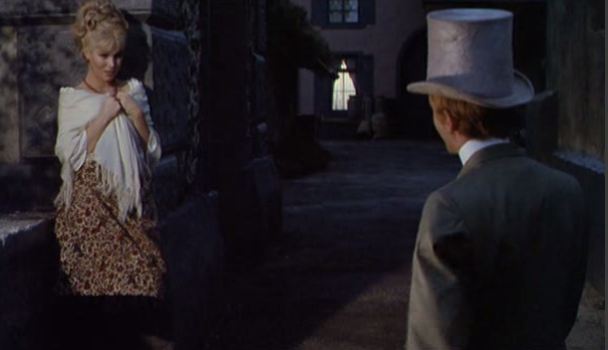
It ends about how you'd expect. Nothing special.

Overall
It wasn't good, but at leasi it wasn't as boring as The Revenge of Frankenstein. I really wish it had been a continuation though, since it seemed like Victor had really gotten himself together at the end. Instead we get a pretty Universal retread once again held together by Peter Cushing. I'd let this one pass you by.
5/10


Frankenstein Created Woman (1967) takes the Baron out of his tired repeated role and gives him an interesting new purpose. Oh and we've rebooted again, for the better this time.

Impression
We open on a drunkard being lead to the chopping block. He spots his son in the distance and has the priest chase him off, but his son, Hans, returns and sees his father lose his head. We cut to the son grown up staring at the gallows before running to help Doctor Hertz pull a body out of a freezer. They revive the body and we discover it is Baron Frankenstein working on an experiment involving the soul's relationship to the body. To celebrate their success they send Hans to retrieve some champagne where he meets a crippled and deformed girl, Christina, who he loves. Her father returns and he clearly doesn't approve. Three local ruffians come in and start picking on Christina. Hans beats the three of them up and when the father stops him, Hans threatens to kill Christina's father. But what happens when her father ends up dead and the locals point to the murderer's son? And how does Frankenstein's experiment relate to all this?

Sorry for the long recap, but I loved this movie. Maybe it is because I've just gone through The Wolf Man 1941 (Decent), Frankenstein versus the Wolf Man (Meh), The Curse of Frankenstein (Decent), The Revenge of Frankenstein (Boring), and above The Evil of Frankenstein (Meh) that I was was really surprised by this film. Characters I care about? A plot that involves more than Victor makes Monster, Monster goes on rampage? Romance, Tragedy and Revenge? This movie has all this and Peter Cushing on his A game.

The sins of the father condemning the son are Hans' theme in the movie. They hint at the idea of hereditary evil, but don't delve too deeply. The idea of capturing a soul and the soul's relationship to the body are the main idea for Victor and Hertz in this movie. They explore it a little, but it largely ends up as a bit of silly pseudoscience. Some shots of Victor and Hertz creating the machine toward the beginning don't make a lot of sense until later, but do provide some important bonding time for the pair.

Our Heroes and Heroine
Hans is a caring, intelligent young man with a temper. He lets his passions sweep him into a frenzy and he doesn't play by the rules. This naturally leads him into some trouble. While Hans isn't the best acted, he certainly brings vitality to the piece. His fight scene with the three jerks is organic and you can feel the sloppy nature of a bar brawl. When Hans and Christina talk about their fathers it is really touching.

Christina is a scarred cripple whose father spends all his money on trying to cure her deformity. Her father is ashamed of her and doesn't approve of her love for Hans. Christina is torn by her devotion to her father and her passion for Hans. I really felt for her character through this story. It is really more her and Hans' story with Victor as a major side character. I feel that this is one of the reasons why it works.

Doctor Hertz is the town doctor and acts as a a compassionate counterpoint to Victor's severity. He is a bit of a bumbling country doctor stereotype, but he does have a few scenes. One where he slyly talks a constable into giving him a body felt very right for giving him an edge of surprise. I also loved the fatherly relationship he develops for the Creature.

"Bodies are easy to come by, souls are not!"
Baron Victor Frankenstein finally makes it to a Hammer hero section! This is my favorite incarnation of the character I've seen so far. I was amazed at how much he was able to do, having to share the screen with so many other characters. Victor begins as a manipulative, callous and dismissive workaholic and manages to progress to stern yet caring scientist. He also has several movie stealing scenes. The scene where he extorts money from the three jerks is hilarious. Also, his cool dismissivness at the trial is superb. Everyone is wasting his time and he does not care for it.

The Mob Mentality

The Mob are a driving point to the plot and back to their prejudicial roots.


Over the Top Foes
Anton, Johann, and Karl are the three jerks who create all of the drama in this story. They're little more than rich boy bullies, but they have a surprising vicious streak. Later they do show some remorse and fear at some of the crimes they commit. They are a great example of power corrupting. I was counting down the minutes for their comeuppance. And they deserved worse.

The Creature, yes I know those of you who have seen this film are about to protest, but I'm trying to go spoiler light on this one. The Creature is fantastic, almost back to the calculating vengeful creature of the novel but with a great twist. There is no rampage, just cold, calculated, creepy revenge.

Cinematic Atmosphere
The location shooting is great. We enough of a town that we believe it all exists. They make good use of simple, but believable sets. Also I really enjoyed the shots in this movie. Victor's entrance in the coffin was perfect. The use of the guillotine and how it reflects the separation of the body and soul. The kills are simple, but effective and creepy. They gradually build until the bursting point at the end.

In the End
The film shifts tone in the last thirty minutes and manages to both stay true to past Frankenstein endings and be a departure at the same time. The ending is unlike any of the other Frankenstein films I've seen. Peter Cushing delivers a pitch perfect performance. It is tragic yet fantastic.

Overall
Yes, I know you can see the score. I also know that any Universal fans might cry foul on a Hammer Frankenstein film even being given a comparable score to any of the first three Universal Frankenstein movies, but I really enjoyed this one. It has its own take on the Frankenstein story, manages to give all the characters agency and purpose, and Victor is just remarkable. There is a lot of silliness and some stereotypes, but I believe they are negligible. If you only see one of Hammer's Frankenstein movies, make it this one!

Sadly, the DVD release is out of print and somewhat difficult to get right now, but they are remastering the Hammer Horror releases starting this year, so hopefully we shall get a proper release soon!
7.5/10

Sunday, 14 October 2012

The Curse of Frankenstein

The Curse of Frankenstein (1957) is the first of the Hammer series of Frankenstein films that focus on an evil Doctor Frankenstein as the villain.

Impressions
Baron Victor Frankenstein  is orphaned young and strikes up a good relationship with his tutor, Dr. Paul Krempe. They advance so far that they can bring the recently dead back to life. However, Victor wants to go further and Paul disagrees. Victor still plans to go ahead regardless. To complicate things, Victor's blushing bride has arrived and she has no idea what Victor is planning.

Not a lot here to love. I can see why it was reviled upon its release. Almost nothing of the book remains aside from casual references. Ingolstadt, the place where the Monster is created in the novel, is where he gets the Monster's hands. The blind man has a weird cameo that doesn't do much aside from establish the Creature as a threat. Instead of being an abnormal brain, like the Universal series, a damaged brain causes the Creature's insanity. The damage is somewhat part of the plot this time though.

Our Hero
Dr. Paul Krempe is Victor's tutor and friend. He is our moral main character and was entirely created for this film. He tries valiantly to save Elizabeth while maintaining his friendship with the increasingly insane Victor. He manages to deliver a solid performance and gets some great banter with Victor and touching moments with Elizabeth.

Relatively Innocent Observers
Elizabeth is back to being both Victor's cousin and love interest in this. The change seems just to up the shocking factor by adding some mild incest. She provides the most emotional attachment of anyone from this movie. The other three have various faults and somewhat deserve what they get, but Elizabeth believes everything will turn out right in the end.

Justine is the horny house maid. Another strange reference. In the novel, Justine is a platonic acquaintance who is accused of killing Victor's brother. In this film she is having an affair with Victor and hopes to marry him. She is probably the weakest actor in this, but she gives us our first look at Victor's amorality.

Cunning Foe
The Creature is insane and mindless in this film. Nothing of the eloquent beast from the novel remains, a tragedy as Christopher Lee. The makeup is horrific, but the Creature has such little agency that I didn't find very threatening at all.

Baron Victor Frankenstein is truly evil in this film. He's not sympathetic nor was he meant to be. It is fantastic to see Peter Cushing play this roll though. Victor carries this movie and it is fascinating to see him sink deeper and deeper into sociopathic madness. Without this performance this movie would have been flat out bad. I also love the idea of Victor setting out to create a perfect being and believing in his goal. Also, unlike the novel, he is completely without remorse and has no problem blaming the creature for his crimes. Personally I enjoy this version a lot more than either of the others, but he also lacks dimension. Flat, but fun.

Limited Atmosphere
The initial prison isn't so bad, nor is the forest. However, some portions of the mansion, where we spend the most time, look very low budget. The technicolor blood is hilarious.

In the End
The end is fitting and rather chilling. I enjoy how Paul turns Victor's machinations against him.

Overall
Peter Cushing's performance sells this movie. If you want a violent and twisted take on Frankenstein, this is it. It doesn't go much deeper than insanity and violence though.
6/10

Friday, 12 October 2012

Frankenstein and Ygor - Universal Monsters -

Son of Frankenstein (1939) is a star studded threequel and the last A-movie Frankenstein by Universal.

Impressions
Baron Wolf von Frankenstein is returning to castle Frankenstein after his father's death. He has high hopes despite his wife's worries. After a chilly reception, Wolf is given his father's old things including the notes to create the Monster. The citizens all worry that he will create another one, since they had so much touble destroying the first. Meanwhile Ygor plots revenge and the Monster may not be as dead as everyone thought.

Universal really went all out with their cast. I usually don't like to spend too much time on the actors, but Basil Rathbone (the classic cinema Sherlock Holmes), Bela Lugosi (Universal's own Dracula) and Boris Karloff (returning as Frankenstein's Monster) requires a pause. This film clearly has a lot of time, effort and love put into it. While it may not be as deep as its two previous entries, Son of Frankenstein tells a more solid story.

Our Heroes at Last
Baron Wolf von Frankenstein is our lead this time around. He is an idealist who bears a stronger tie to the Victor Frankenstein of the novel than Henry did. He is also presented as a loving family man and a brilliant scientist. He holds this movie together and it thanks to a fantastic performance that he is the first Frankenstein I've empathized with. He makes stupid mistakes and does some stupid things, but he isn't nearly as bad as any of the others.

Elsa von Frankenstein is Wolf's wife. She believes in her husband and manages to voice her opinions on the house, the family's future, and the safety of her son. She holds some of the emotion in this story since most of the rest of the cast is out for revenge in some sort or another.

Inspector Krogh is the inspector of the town who tries to keep a close eye on Wolf. He had his arm ripped of by Frankenstein as a child, gruesome. He is an unrelenting force for justice with a tinge of personal revenge. There is also some dark humor in the use of his false arm.

The Mob Mentality
Peter von Frankenstein is Wolf's son. He is incredibly annoying and really brings the film down a little. He tries to be cute and playful, but ends up rather terrifying. He does play an important role in the plot though.

Benson is the Frankenstein family butler and lab assistant to Wolf. I like how we get to see a strong relationship based on shared history payed out through small scenes and subtle acknowledgement. This is what I wanted from Fritz! He does eventually being to question Wolf, but who wouldn't after reviving a killing machine?

The mob returns though they do have legitimate grievances by this point. Their bitter memories and fear of the Frankenstein family lead them to quick judgements. They also show up at Wolf's arrival in the rain only to walk out during his speech, cold.

Misunderstood Foes
The Monster is back and more controlled than before. He has lost the ability to speak and has fallen under Ygor's spell, presumably because he plays music or just treats him compassionately. Another fine performance though the monster is a bit underutilized as a tool for Ygor's revenge.

Ygor is difficult to pin down. We don't know exactly what his crime is. The councilors claim they caught him grave robbing, but they seem to have a deeper hatred of him. Ygor seems to think he was convicted unfairly. We never really find out what he did from a reliable source. He was hanged, but other than needing a neck brace he is okay. His revenge against the leaders of the town is the main drive of the plot and he plays the tricky devil figure well. I felt he was more on the sympathetic side, but the sequel to this movie disagrees with me.

Twisted Atmosphere
I think they upped the bizarreness of the house design because it looks like Escher designed sections of it. There are also far more secret passages everywhere used by Ygor and the Monster to spy and exact revenge. They also went all out with all the sets in this, everything looks like it has sprung from a nightmare.

In the End
The ending was surprisingly bad ass with some fine action pieces for this old a movie. The tension is stirred with several deft moments of suspense where the characters really shine.

Overall
Despite the strong acting and star power, this movie does suffer from some silliness. Wolf keeps secrets for way too long and covers for some things I don't think he would have. Also, I didn't realize Frankenstein was the original member of the Fantastic Four, thank you cosmic ray pseudoscience. Despite these flaws it is a good movie and holds up better story wise than its predecessors.
7/10

Ghost of Frankenstein (1942) has some good acting, but most everything else is not so good.

Impressions
The villagers from the last film blow up Frankenstein castle and lab. In doing so they inadvertently free the Monster who is joined by Ygor. Apparently Ygor has been using his time to look up Wolf's previously unmentioned brother who lives in a village not far away. It is far enough that they haven't heard of the Monster, but they soon will. Doctor Ludwig Frankenstein is conveniently an expert on curing the mentally unstable through surgery.

By far the weakest and most confused of the solo Frankenstein series. This one still packs a strong cast, but the story is all over the place.

Our Heroes
Doctor Ludwig Frankenstein is a very impressive force. He has several scenes where he just stares down the Monster. Unfortunately, he seems to suffer the same weird need to cover up stuff as his brother. I got used to Ygor's blackmail, but he has some other perplexing decisions such as covering up his friend's death and then deciding that his friend would be happier resurrected as the hated Monster.

Elsa Frankenstein is Ludwig's daughter, apparently named after her aunt. She is a headstong girl whose love for Ernst, the prosecutor is torn by her love for her father. She tries to make peace between them and stop her father's plans which is an even stronger goal than either of her predecessors.

Erik Ernst is the town prosecutor and Elsa's love. He has a fairly strong presence, but is overshadowed by Ludwig. He does some impressive things such as preventing the mob from massacring the Frankenstein family.

The Mob Mentality
The little girl in this film is excellent in a call back to the first film.

The mob spurs the main cast into action and gets some action in the end. They seem to get dumber and more superstitious each movie and this isn't even the same mob!

Misunderstood Foe
The Monster is once again only a pawn. He has some cute scenes involving children, but doesn't do much until the very end of the film.

True Foe
Doctor Bohmer gets some henchman style villain as he tries to get back in the medical spotlight. This sidekick betrayal is almost a running gag. Why would he agree to help Ygor and how would that help his career or ruin Frankenstein's?

Ygor is back and play the maniacal villain this time. He has some creepy moments, but spends most of his time hamming it up.


Blander Atmosphere
The sets aren't really less convincing as they are more bland. Gone are the epic castles and mountainous terrain. In their place is generic German village #62. This is to be expected since they had a reduced budget. It really only becomes noticeable when contrasted against the previous three films.

In the End
The end is jarring and gets some very out of character action by Elsa and Ernst.

Overall
There is a large reliance on the abnormal brain subplot from the first film. It has been mentioned a few times in the previous films, but here they treat it with no subtlety whatsoever. See this one if you're interested in more Frankenstein or plan on seeing the Wolf Man continuation, Frankenstein Meets the Wolf Man. Otherwise I'd leave it at Son of Frankenstein.
6/10

Be sure to check out the the 31 Days of Macabre Movies over at The Good, The Bad and The Magnificent.