Reviews May Contain Minor Spoilers

If you're reading a review you should expect to hear some spoilers. I try to keep them to a minimum though.
Showing posts with label Gothic. Show all posts

Thursday, 2 January 2014

Sherlock Holmes: The Twelve Black Stains (47-60)

Happy New Year! With the premiere of the new season of Sherlock, I thought I'd go through my ranking of the entire Sherlock Holmes Canon by Sir Arthur Conan Doyle. These ratings are by story as opposed to by collection. The novels are included as a single 'story' each, though none of the novels are featured in this post. Given that these twelve are the only ones I really can't recommend, it makes Doyle's works all that more impressive. So, here are:


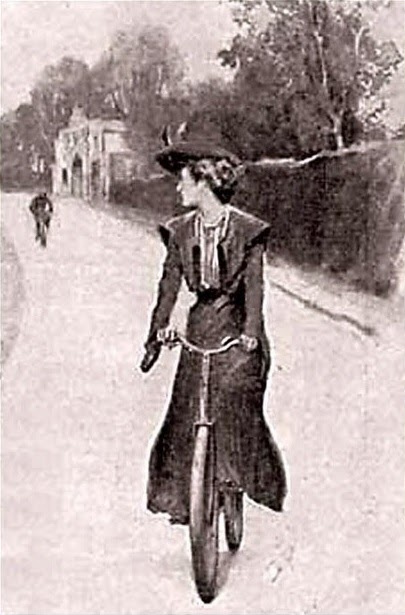
49."The Adventure of the Solitary Cyclist" 5.5/10 (Short Story from The Return of Sherlock Holmes)
A woman is hired by a gentleman to be his housekeeper, but she is continually followed to work by a lone cyclist. Adding to her troubles is that her boss's friend is a jerk with the hots for her. This story is long and has some problems with pacing. It is unbelievable that Sherlock Holmes has to point out that a marriage is not valid until both parties say 'I do."

50. "The Adventure of the Six Napoleons" 5.5/10 (Short Story from The Return of Sherlock Holmes)
Sherlock Holmes must figure out why someone is smashing busts of Napoleon. This one is only this low because the crime seemed really obvious.

51. "The Adventure of the Sussex Vampire" 5.5/10 (Short Story from The Case Book of Sherlock Holmes)
A heartfelt, if disappointing tale, involving Sherlock clearing the suspicion around a very simple case. The best part of this story comes from the emotion written into the Ferguson family.

52. "The Adventure of the Resident Patient" 5/10 (Short Story from The Memoirs of Sherlock Holmes)
An old man gets frightened by footprints. Okay, it ends up being much more complicated and perilous than that, but it didn't have a good hook or endearing characters.

53. "The Adventure of the Stockbroker's Clerk" 5/10 (Short Story from The Memoirs of Sherlock Holmes)
A young man consults Holmes about a job that seems too strange to  be true. So convoluted that it becomes tedious and boring, this is perhaps the most average Sherlock Holmes story.

54. "The Disappearance of Lady Frances Carfax" 4.5/10 (Short Story from His Last Bow)
A lady has disappeared in France and Holmes has deduced that foul play is involved. This a rough Holmes story. Most of the elegant detection is throw out while Sherlock acts like a mad ruffian. While some cases call for this, Holmes could have used discretion to successfully solve the case.

55. "The Adventure of the Devil's Foot" 4.5/10 Stars (Short Story from His Last Bow)
While Sherlock Holmes convalesces at a seaside resort, an event happens that appears supernatural in nature. A woman is killed and her two brothers are driven mad with little sign as to what or who could have killed them. There just wasn't much deduction in this story and the explanations for the deaths were really weak.

56. "The Adventure of the Yellow Face" 4/10 (Short Story from The Memoirs of Sherlock Holmes)
The token "Sherlock Holmes is wrong"story from Memoirs. Sherlock Holmes is approached about a man whose wife is behaving strangely. The situation becomes conflated and it turns out to be more about lack of trust than anything sinister. This is a worse version of "The Dancing Men."

57. "The Adventure of Wisteria Lodge" 4/10 Stars (Short Story from His Last Bow)
A man goes to visit a friend for dinner and wakes up to find the house empty the next day. The first part is promising, but the second part is a big let down. The muddled facts and the puffed up villain make this case kind of a dud. Not even any really great deductive bits. Also, there is an unfortunate amount of racism in this tale.

58. "The Adventure of the Mazarin Stone" 3/10 (Short Story from The Case Book of Sherlock Holmes)
The 'Seven-Per-Cent Solution' Watson was right to name this one a forgery. It reads like a cobbled together “Blue Carbuncle” and “Dying Detective.” Another 'nefarious' villain who turns out to be even stupider than the one from “Wisteria Lodge.” This is rightfully seen as one of the worst stories.

59. "The Adventure of the Veiled Lodger" 2/10 (Short Story from The Case Book of Sherlock Holmes)
Why was this adventure written? Sherlock Holmes has failed a case and has it told to him at a later date. There are plenty of Sherlock Holmes fails stories, and this one adds nothing new. It isn't even interesting, just a boring account. I suppose Doyle tries to drive some pathos for the Veiled Lodger, but it just comes off as baffling. There is a bit of Sherlockian persuasion at the end, but not enough to save this story. My version of Watson declares this one a forgery! I can do that, right?

60. "The Five Orange Pips" 1/10 (Short Story from The Adventures of Sherlock Holmes)
My least favorite tale is the most dissatisfying of the first set of Holmes stories. This is partially because as an American the mystery behind "KKK" is... thin at best. Plus the mystery is convoluted and the ending is dissatisfying. I can't believe this ever made it to one of Doyle's 'best of' lists.

Next time: The stories whose only crimes are being average!

Tuesday, 29 October 2013

The Phantom of the Opera (classic novel)

Night 11
The Phantom of the Opera (1911) By: Gaston Leroux

Impressions
M. Leroux is piecing together evidence of the true happenings of behind some deaths, a kidnapping, and a ghost at the Paris Opera House. He recounts the various 'sightings' by the performers, which include the ghost being eyeless, noseless, and with head aflame. He then recounts the singular experience of Raoul and his attraction to the break out singer Christine. After leaving her room, he hears her speaking with someone, so he waits until she goes out. Then he checks again, but finds no one there.

This novel has been popularized through many different forms of media that I haven't seen, so I'm coming at this without many prior conceptions. The story is surprisingly comical. Even near the end there are some strange jokes and oddities to alleviate the tension. The story itself is told in segments, so it begins with rumor and ends with fact. The style makes the beginning a bit chaotic, but allows for more of a build in tension as the reader tries to figure out what's really going on.

Our Heroine
Christine Daae is an opera understudy who finds her big break after being coached by an angel. Despite being the main protagonist, the story is never told from her point of view. She is a young woman with mixed feelings, trying to decide between two suitors. She gets a surprising amount of agency given her position and uses it to test the two of them. Why is she in the heroine spot? Read the novel to find out.

Haunted Observers
Raoul, Vicomte de Chagny is determined to win Christine's hand. He and Christine met as children once and he has been fond of her ever since. He does not approve of her relations with the ghost and seeks to save her. He's kind of a dunce, a hotheaded one at that, but not without genuine affection for Christine. He acts more as a parallel than a foil to the ghost.

The Persian Daroga is the only man who knows the Opera Ghost's past. He appears briefly at the start and becomes prominent at the very end. His story makes up the juiciest bit of the narrative.

M. Moncharmin and M.Richard are the new owners of the Paris Opera House. Their feud with the Opera Ghost relieves the drama of Christine's plight and allows for some humor as they adjust to the Opera Ghost's demands.

Hideous Foe
The Opera Ghost or the Angel of Music sees fit to train Christine to become a great opera singer. He is known as a hideous monster, but some of his actions betray a softer side. He has a definite sense of humor, albeit a morbid one on occasion. The fun of this novel is trying to piece together what exactly the Opera Ghost wants and that is something the tale does not give up lightly.

Parisian Atmosphere
There is a great deal of French manners in this book, so much so that the ghost takes advantage of it. The chaos of the opera house comes through loud and clear, as do the Opera Ghost's manipulations of it. The free versions even end with an extended description of the real Paris Opera House.

In the End
The ghost's secrets are revealed, mostly, and Christine makes her choice. The end of the story brought back some of the hallmarks from the middle of the novel and fixed some issues with the chapters immediately prior. All in all, a fitting end.

Overall
An enjoyable read with some patchy sections near the beginning and end. The roughness gets smoothed out fairly quickly though, making the overall experience a great one. Read it if you enjoy horror with a lighter, more romantic tone.
8.5/10

Check it out for free on Project Gutenberg and Kindle!

Monday, 21 October 2013

The Lost Stradivarius

Night 3
The Lost Stradivarius (1895) By: J. Meade Falkner

Impressions
Sophie Maltravers relates the tale of her brother to her nephew. At Oxford, John Maltravers and Mr. Gaskell discover a piece of music called the Areopagita Gagliarda. Each night when they play it they hear someone sit down in a wicker chair in the room. This presence also gets up when they finish. Soon they cannot resist and play the piece whenever they are together. After a frenzied night and a ghostly encounter, John discovers a hidden cubby in his room with the finest violin he's ever seen.

The build up during the first half of the novel is superb. The climb from small noises to full manifestation is awesome. Unfortunately, John's slide off the deep end during the second half takes up far too much of the novel. The frame story flows nicely during the first half and then becomes bogged down by Sophie's lack of information on the happenings in the second half. If it had switched to Gaskell, who finishes the story, earlier, it would have had a tighter narrative.

Our Narrator
Sophie Maltravers is a lady who watches her brother and best friend fall to the deadly curse of the lost Stradivarius. She is sympathetic and speaks passionately of her brother, even  excusing some of his possessed behavior. Her downfall is that she's limited by what her brother told her, a lot in teh beginning, not so much about the end.

Aristocratic Observers
Lord John Maltravers becomes obsessed with the violin and its owner Adrian Temple. This obsession leads him down a road of self destruction.

Mr. Gaskell is a friend of John's from Oxford. He first introduces the piece to John and is skeptical of the ghostly happenings surrounding the Stradivarius. He section of the tale is most enlightening and provides a long overdue payoff and a beautiful end to the story.

Constance is John's girlfriend and future wife. She, much like women of her time, lives through her husband. She is worse affected than her husband by his possession.

Ghostly Foe
Adrian Temple is a sinister man whose wanton decadence leads to the deaths of many. Unfortunately, we never find out exactly what he was up to, but in the larger sense of the narrative, it doesn't matter.

Spooky Atmosphere
From the Oxford halls to the house of Worth Maltravers, the environment is beautifully rendered. I especially enjoyed the visions of the apparition. The porse during John's time in Europe is less so as we're dictated vague letters.

In the End
Much like Carmilla, the end of the story proper isn't that great, but the end of the novel is awesome.

Overall
The Lost Stradivarius is a mixed bag with half of it being great and half being filler. However, the strength of the first half and the very end of the novel make it a worthwhile read with especially creepy atmosphere and some great ideas about music's affect on the psyche. It has been compared to the work of M.R. James, so check out the better of his short stories to see if you'll like this. 7/10

Read it on Project Gutenberg and Kindle.

Saturday, 19 October 2013

Carmilla

Well, it's that time again! As I mentioned when I reviewed Hammer's Karnstein Trilogy, first up is Carmilla, which came out 53 years after Polidori's The Vampyre and 25 years prior to Stoker's Dracula.

Night 1
 Carmilla (1872) By: Joseph Sheridan Le Fanu

Impressions
A lonely girl lives in an old castle amongst the Hungarian mountains with her father. As a child, dreamt that she was older and someone slipped into her bed. It was a beautiful girl who gently kissed her breast, then bit her. After this traumatic experience, she has grown up peacefully for several years, until she is the age from her dream. She is expecting a visit from a nearby general and his daughter, when the general's daughter suddenly dies, and the trip is cancelled. However, she is soon visited by an old woman who leaves her daughter to stay: Carmilla: the beautiful girl from her childhood dream.

Twenty-five years before Dracula, Irishman J.S. Le Fanu penned this classic tale of lesbian vampires. The sexuality is never overt, and allows the reader to focus on the more psychological aspects of Laura and Carmilla's relationship. The build up of tension is great; although, much like Jekyll and Hyde from last year, this story is somewhat ruined by its reputation. Though excellently written, the story does languish on some superfluous passages.

Our Victim
Laura is a young woman descended from the noble Karnstein line on her mother's side. Much like the film, she is a noble girl who is boring aside from her interactions with Carmilla.

Foolish Bystanders
The General Spielsdorf is the first person who takes in  Carmilla. By the time he takes action, it is far too late: his daughter is dead. Though he does charge in with sword drawn, so he's at least prepared for the follow through.

Laura's father is even more of a fool than the General though he cares for his daughter. He only suspects Carmilla after encountering the general.

Shifty Foe
Carmilla is a great foe, whose succubus like desires are only confused by the fact that she might actually feel something for the girls she is slowly killing. Much like Dracula, Carmilla survives through cleverness and relies on her cleverness to feed. Unlike the count, Carmilla isn't as awesomely powerful.

Gothic Atmosphere
The passages describing the rustic castles and the sylvan crags surrounding them are fantastic. The life in the the area is also well presented, with the funeral scene being particularly great. You really get a feel for the life back then in this text, as mundane as certain sections might be.

In the End
The end of the story proper is incredibly dissatisfying, but the end of the novella itself really redeems it.

Overall
Carmilla shines with the atmosphere chills of its age. Despite digressing into some tediousness, it bounces back quickly with consistent eery moments. With a superbly chilling villainess and interesting psychological angles, this book is sure to satisfy fans of vampire fiction and Gothic horror.
9/10

Read it free from Project Gutenberg and Kindle!

Saturday, 27 October 2012

The Turn of the Screw

Night 9
The Turn of the Screw (1898) By: Henry James

Impressions
A governess is hired to care for a man's niece and nephew, but not to contact him at all. She finds the children to be little angels, but learns the boy, Miles, has been expelled from his boarding school for unspecified reasons. Then she begins to see the ghosts of a former driver and the former governess. Is the madness all in her head or have the children seen the ghosts too.

The only thing I knew about this before reading it was that it was a famous ghost story. This is very literary tale, even by the standards of Frankenstein. In my opinion it is too literary to enjoy. There aren't really any characters, yet it seems to explore be exploring insanity and the supernatural nature of ghosts. This is a story along the lines of Jane Eyre.  

Warning possible rant follows.

Mad Heroine
The Governess is our unreliable narrator and we don't really get to find out much about her. She sees the ghosts as sinister and threatening, but they never do anything. That is part of James' point and I guess he was among the first to do it, but it just seems like bad writing now. Also, she has a bent with proving that the ghosts are read and vindicating herself. For me, this served to make her seem even more crazy and irritating. All in all, it seemed like a man writing an overly hysterical woman. Classy.

Strange Observers
Miles is the creepy little boy that she must take care of. He was expelled from school for... something, and seeks to test the limits of his freedom. He is an annoying, overly smart little brat, so of course our crazy heroine loves him. The most we really find out about him is that he is nice and smart.

Flora is Miles' sister and suffers from super smart child syndrome as well. She may or may not have seen the ghosts and may or may not lie about seeing them at any given time. Why do I care about either of these children? Oh yeah, I don't.

There's also a housekeeper Mrs. Grose who acts as the governess' confidant. She is described as infinitely kind and doesn't serve to help the situation much.

Literary Atmosphere
This is so ambiguous and wordy that it is hard to understand without a Master's Degree in literary theory (I do not have one of those). I guess that was intentional, but it also makes it frustrating to read. Especially when the mystery and characters are so lackluster that I don't care about them either. Henry James also has an annoying style of capitalizing words for emphasis. I don't have a problem with this usually, but he does it one or two times a page. Also, James tends to, often, interject colloquialisms into the writing separated by commas (like I tried and failed to do at the beginning here). This makes his writing long, wordy and difficult to read.

In the End
I thought the end was abrupt and stupid, but I might be stating that a little harshly. It did end. Resolutions? That is for literary theorists I guess. I pity the students who have to read this for a class.

Overall
I can't recommend this to a casual reader. It was frustrating enough for me to read. It is short and I suppose it could have fans with those who like Jane Eyre. That is clearly not me, though. All the characters are meant to be sugar sweet, but are so badly descried that I barely care to tell them apart. The mysteries involving the intentionally unscary ghosts and the reason for Miles' expulsion are never solved. Yay, literature! Maybe I just don't 'get' it. It's no wonder people don't read.
4/10

Oh and it's free and stuff.

Tuesday, 23 October 2012

Dracula - Classic Novel -


Night 5
Dracula (1897) By: Bram Stoker

Impressions
Jonathan Harker heads to the Carpathian Mountains to offer his council to Count Dracula on the purchase of some property in London. On the way, the locals seem wary and constantly try to delay him. Once he arrives he finds his host is more than he seems. Later, a ship of dead men crashes into London harbor with a large black dog being the only survivor. Afterwards, strange things start happening in town.

Dracula is another classic that has a more populous appeal than Frankenstein. It has fewer intricacies and themes, but is much more dramatic and draws the reader in so that they don't want to put it down.

Not to say that it doesn't have very interesting ideas. In one part, an old man talks to Mina and Lucy about the lies that tombstones tell. It is a very interesting and dark bit of humor. Also, Dr. Seward makes some comments of man's view of man in relation to himself. How God views his creations versus how man tends to think he views them are really fascinating to think about.

"These infinitesimal distinctions between man and man are too paltry for an Omnipotent Being. How these madmen give themselves away! The real God taketh heed lest a sparrow fall. But the God created from human vanity sees no difference between an eagle and a sparrow. Oh, if men only knew!"

Our Heroes
Lord Godalming aka Arthur Holmwood is Lucy's finance. He uses his influence and money to make the heroes' hunt for Dracula smoother. He is devoted to Lucy and we get to experience his shock, anguish, and drive through the others. He takes the leading in hunting and tracking, but is assisted by Quincey. Each of our heroes has a part to play, though the film versions often omit or combine them.

Quincey Morris is a Texan and a former suitor of Lucy's. He is also an experienced hunter. He uses American slang and is the quickest to jump into a fight. While many of his mannerism are cliche Texan, he has a soft, gentlemanly side. He really feels for his friends and would do anything for them.

Doctor John Seward is one of our POV characters, one of Lucy's suitors, and a doctor at the sanitarium. He is the man who calls in Van Helsing, though even he doubts his former mentor at times. Through him we get lots of insight from Renfield as well as learning about Lucy and Van Helsing. he starts out a bit know it all, but soon warmed as a solid member of the team.

Jonathan Harker is another of our POV characters, Mina's fiance (husband later), and is a solicitor who is originally contracted to buy a house for Dracula. Jonathan is often portrayed as kind of a wuss in Dracula film adaptions and this is unfair, since he is quite brave in the novel. He has periods of insanity and self-doubt, but he mans up and does what needs to be done.

Mina Murray-Harker is the fiance (wife later) and assistant to Jonathan. Many of the film adaptions portray her as a smitten young woman, but that is not how she is portrayed in the novel. She is a strong capable woman who really only gets in trouble due to the sexist ignorance of her male counterparts. There is a curious sense of feminism about her story that is difficult to pin down.

Abraham Van Helsing is the old expert of everything. His age limits him from being able to take on Dracula and his ilk alone. He also realizes how crazy he could sound and introduces the characters to the darker side of the world slowly. He gets a bit talkative toward the end, but he ends up being every bit the methodical demon hunter he's cracked up to be.

Distressed Observers
Lucy is a popular lady who is the love of Dr. Seward, Mr. Morris, and Lord Godlaming. She is the character we first get to see plagued by Dracula. The effect is scary, and their fight is an uphill battle.

Renfield is a patient at the insane asylum who has fallen under the thrall of Dracula. Through his point of view we get many creepy scenes and some vital information about the count. He is a strange, but likeable tortured character.

Monstrous Foe
Dracula is quite mysterious and disguises his presence quite well. Without the combined experience of all the characters it is really doubtful that he could have been defeated. Dracula is at the height of his power in this. He is able to transform into: a wolf, a bat, a dog, and fog. He is able to travel using moonlight and he can summon storms, fog and wind. Not to mention the typical vampire abilities of strength and speed. They use 'less is more' to great effect in showing only Dracula at his most mysterious and powerful. He is not often present, but drives every aspect of the plot anyway.

Gripping Atmosphere
The descriptions and pacing draw you into the story fantastically. The characters are smoothly introduced, so by then time we get an excerpt from them we've gotten a description or mention of them from another character beforehand.

In the End
Right before the end there are a lot of drawn out planning and discussion scenes leading into the rather abrupt finale. The ending was satisfying and surprisingly dark. The final confrontation with Dracula could have been a bit more climactic and clear.

Overall
This book is full of suspense and horror that is well executed. The plot threads that seem distant and numerous at the beginning slowly wind into a masterful story that still holds up today. From Jonathan's thrilling exploits in Castle Dracula to the harrowing chase at the end. I can recommend Dracula as something anyone can enjoy.
10/10

Remember, it's free for Kindle and from Project Gutenberg!

Monday, 22 October 2012

The Castle of Otranto

Night 4
The Castle of Otranto (1764)
By: Horace Walpole

Impressions
On Prince Conrad's wedding day he is crushed by a massive helmet that seems to have fallen from the sky. His father, Prince Manfred, is furious and believes there to be some culprit. When a young man, Theodore, steps forward and notes that the helmet is from the statue of a former ruler, he is accused of witchcraft and sentenced to death. Manfred realizes that he has no heir, so he decides to divorce his wife and take his son's promised bride as his own. Isabella, the bride, doesn't like this and decides to flee to the nearby abbey run by Friar Jerome. In her escape she is aided by a ghost and the mysteriously escaped Theodore. Soon Manfred's wife, Hippolita, and daughter, Matilda are drawn into the mysteries of the Castle of Otranto.

As identified in the forward, the closest we get to a moral is that the sins of the father are visited on his heirs. In this story that means giant ghosts and statues crying blood. The Castle of Otranto is very much a product of the eighteenth century. Everyone seems either bursting with virtue or descends into sin at the slightest provocation. All the characters have an intense fear of God and most are easily dissuaded by omens. The only character with a touch of grayness is the priest and he seems to sin more often than not. Though, unlike Manfred he has good reason most of the time. As such, it is very difficult to measure on a modern scale, but I'll do my best.

Our Hero
Theodore is a young man who starts off as a minor character down on his luck, but rapidly ascends through the course of the book. He is so good it's almost painful to read. He has no flaws. He forgives all who wrong him and speaks only the truth. He is so virtuous that he can make any good person come to his aide just by giving an impassioned speech. It seems the only ones able to resist him are vile assholes. Fortunately, there's one of those to oppose him.

Assorted Observers
Hippolita is the infinitely virtuous Princess and wife of Manfred. She won't even hear bad things said about her husband. This gets really obnoxious since she just comes off as stupid.

Matilda is Hippolita and Manfred's daughter. She is attracted to Theodore, but they can't be together because he is a peasant, and it would ruin Manfred's plotting. She is pious and chaste and is alright sometimes, but some of her overly polite conversations with Isabella, Hippolita and her servants are unbearably tedious.

Isabella is the former fiance of Manfred's son Conrad. Most of the novel involves her trying to avoid marrying Manfred. She is very similar to Matilda, but with less family ties. As such she can also be kind of tedious, but she has less opportunity due to the fact that she's constantly fleeing Manfred.

Friar Jerome is a priest who knows Hippolita well and is the chief religious official in the area. He comes under Manfred's sway, but struggles with his own sins. As mentioned above, he is perhaps the most interesting character. His struggle and motives are the easiest to relate with in this tale.

Frederic is Isabella's father who arrives near the end to reclaim Castle Otranto to his family. He ends up being almost as bad as Manfred, but not quite.

Awful Foe
Prince Manfred is one of the worst fathers in literature. It is only due to the limit of his title that he doesn't go around raping and pillaging. He is a cunning asshole though, as he uses leverage and deceit to manipulate all those around him. Toward the end you find out why, but it really doesn't make him any better.

Gothic Atmosphere
This is considered the first Gothic novel and it has everything a haunted castle, virtuous maidens, secrets, you name it. It comes across as a medieval fairy tale and that is how it was originally marketed. The writing is nothing special, but it will give you a look at the structures and vocabulary of the time.

The Real Otranto Castle in Italy
In the End
The secrets are revealed and prophecies come true. It was pretty much as advertised complete with bittersweet ending.

Overall
Old men are perverts, women are chaste and young men are beacons of chastity. I didn't love it, but it wasn't bad. This is will be an interesting read for fans of Eighteenth century or Gothic literature, but likely rather puzzling for most others. I'm in the latter category, but I thought it was okay.
6/10

Of course, it's free on Kindle and at Project Gutenburg!

Sunday, 21 October 2012

Vathek; The History of the Caliph

Night 3
Vathek (1786) By: William Beckford

Impressions
Vathek is the ruler of a kingdom and has devoted his life to pleasure. One day he buys some beautiful swords from a merchant claiming to be from India. He wants to know where the merchant got them, but when he refuses to speak the Caliph becomes angry. He uses his special ability of killing people with a look, but that doesn't work. Instead, he imprisons the merchant. The next morning the merchant has escaped, and his guards are all dead. This begins several misadventures involving the merchant, known as the Giaour, offering Vathek more and more at increasingly higher cost. This leads his mother, Princess Carathis, to send him on a quest of power and damnation.

This is a stream of consciousness story and would have benefited from chapters or at least some form of break. It is a long series of paragraphs that make it difficult to tell when we switch characters, place or start a new part of the story. The first quarter is enjoyable, but as characters were added and plot points randomly brought up it becomes more difficult to follow. Also, all the characters have Arabian names that cause confusion. especially about several of the minor characters and their allegiances.

They're All Doomed Anyway  (Maybe Not All)
Vathek is the Caliph who has grown up in the lap of luxury. The story says be is beautiful, but once they describe his ridiculous eating habits; it is easy to picture him as fat. The man has everything one could want, which leads him to want more than he should is nothing new and his character is stretched to the breaking point. His antics are amusing at the start, but begin to wear in the middle

Carathis is Vathek’s mother who craves power and has a accursed castle filled with mummys and mute servants. She has raised her some into the spoiled brat that he is, but she has managed to teach him black magic and astronomy. At the start her role is quite confusing. Adviser? Lover? Mother? Temptress? She evolves from adviser to mother over the course of the story.

The Giaour is the best thing about this tale. He is a devil figure and an amusing tempter and tormenter of Vathek. He becomes a minor character after the first 25% and that's where this story lost its luster. The Giaour torturing Vathek is funny. Vathek doing stupid things is not funny. His name mean unbeliever or infidel, so don't use 'giaour' around any Muslim friends.

Emir Fakreddin offers Vthek and his entourage a place to rest during their travels. He is a man of such faith that his keeps fifty dwarves who study the Koran daily. Vathek, being the little crap that he is, decides to seduce the Emir's daughter, break up her engagement and nearly kill the Emir.

Nouronihar is the Emir's daughter. She was almost as difficult to pin down as Carathis. I think Beckford either had a hard time writing women or knew only fickle women. She starts off being in love with and engaged to her effeminate cousin Gulchenrouz. After a series of events she changes her mind and sticks by Vathek to the end. I really didn't care about her or her story.


Hellish Atmosphere
The book has some great descriptions and it is clear that Beckford knew a lot about his subject. This has been called the 1,002nd Arabian Night and does evoke the feel of a Middle Eastern Fairy Tale. Unfortunately. Beckford is a white guy which makes a lot of things in this story fairly racist. He wrote it a long time ago, but it is still uncomfortable to read about how 'blackness' is 'evil.'

In the End
This story gets a bit rambling and lost in the middle as it tries to hammer in its point. As such, the ending being a moral lesson dump is a big let down. It does have some fantastically gruesome imagery right before the end, but the last page spoils the effort made that far.

Overall
For modern readers this will likely be more of a chore than it's worth. There are much better horror comedy fictions to read. However, the writing and descriptions were well done, and the start is amusing. I'd say it is worth reading the first 25% and then the last 15% all you miss is Vathek doing more stupid things and picking up the princess.
5/10

Remember this is free for Kindle and at Project Gutenberg!

Saturday, 20 October 2012

The Vampyre; A Tale


Night 2
The Vampyre; A Tale (1819)
By: John William Polidori

Impressions
This is a story about a man, Aubrey, who becomes fascinated with the mysterious Lord Ruthven. They go on trip to Greece where Aubrey falls in love with a local girl, Ianthe. Ianthe is murdered by a creature that Aubrey believes is Lord Ruthven. After the attack, Aubrey falls sick, but Lord Ruthven nurses him back to health. The two journey more, but are attacked by bandits. Lord Ruthven is mortally wounded. His body disappears soon after his death. When Aubrey returns home he finds his sister has been seduced by a mysterious newcomer.

This is story that has not aged well. The descriptions are often confusing and the characters are caricatures. That being said, there are many beautiful descriptions and this sets up many things that appear in vampire literature all the way to the present: their alluring nature, their aristocratic feel, their desire for blood and their cruel manipulations. Funny enough, most of these were carried over from his friend Lord Byron. One of my favorite things in the novel was the mention of how Lord Ruthven causes the women he's involved with to lose their inhibitions. The novella states "his partner, the victim of his guilt, should be hurled from the pinnacle of unsullied virtue down to the lowest abyss of infamy and degradation" and "thrown even the mask aside, and had not scrupled to expose the whole deformity of their vices to the public gaze." Interesting stuff that is rarely used effectively even with today's lascivious vampires.

Our Hero the Wuss
Aubrey is a romantic nobleman who develops a curiosity with Lord Ruthven. Aubrey takes the initiative to investigate the lord and is astonished that he wallows in vices such as gambling and seduction. Aubrey; however, seems to fall into those weird Victorian fits of emotional unhealthiness. He is in this state for over half the novella. We get some nice descriptions of his paranoia, but he goes from zero to bedridden in the space of a paragraph. He could have used some major expansion to his character.

Plot Devices Observers
Ianthe appears out of nowhere and dies just as suddenly.

Aubrey's sister doesn't even get a name. She appears and we do get some time to build up affection for her, but then the end of the novel gets pretty strange.

Seductive Foe
Lord Ruthven could be the most interesting character if we saw more of him. I like the idea of him being manipulative and viceful, but the novel doesn't give us enough time to fear or care about him. Most of the time he is just a mysterious and pretty noble.

Foggy Atmosphere
Polidori's descriptions shift between being beautiful and being so wordy you have to read them a second time. One might chalk this up to the time period, but Frankenstein was developed at the same time and I do not find it nearly so unreadable. There are a few old and interesting words: a montebank is a person who deceives others usually to get their money and a voluptuary is a person devoted to luxury or sensual pleasure. Voluptuous was a common word back then when describing vampires and it appears several times in Dracula.

In the End
The end is abrupt, but fairly chilling, especially the sense of old time horror it evokes.

Overall
As I mentioned at the beginning, this is not a story that has aged well, but it is short. Reading it, including the preface, introduction and letters sections, takes about two hours. That is including rereading some sections. If you like vampire fiction and want to explore its roots this is nice and short, but not required.
4/10

And remember it is free for Kindle on Amazon or from Project Gutenburg!

Friday, 19 October 2012

Frankenstein; or, The Modern Prometheus

Night 1
Frankenstein; or, The Modern Prometheus (1823) By: Mary Wollstonecraft Shelley

Impressions
Victor Frankenstein is inspired by the alchemists of old and the power of lightning to try to create a man. He succeeds, but is so frightened by what he has created that he flees from it. He believes himself to be fine, until the murders start.

This novel is considered a classic of English Literature for many reasons. The Romantic respect for nature is very present. The horror comes from the unknown and unwillingness to trust as much as the heinous deeds that occur. The idea of appearance being paramount to trust is the most on the surface, but there is also the exploration into what makes a man. Beyond that we also see what makes on good and what makes one evil. There are some interesting homosexual undertones that can be read today, but I'm not sure were intended. Also, just to add to the weight of all that, there are some possible abortion/adoption issues beyond just the monster actually saying the word 'abortion.'

I haven't read Frankenstein for about five years. I first read it in a class on the Romantic period and found it interesting. However; at that time I was not the most mature and this re-read has shone a light on a lot of the text. This is the more commonly read 1823 revision. There is an earlier version with more malice put into the Monster and Elizabeth is Victor's first cousin (so incest).


Our Hero?
Victor Frankenstein whines a bit, yes, but he does provide an interesting character to follow for most of the novel. He has grown up in a life of privilege and fancy. He has the big dreams of a young man and the means to accomplish them. We get to see his motivations and his passions and then watch as everything is stripped from him due to his own cowardice and untrusting nature. He's not very sympathetic, and as his world collapses around him, it is his own hand that wrought the destruction.

Innocent Observers
Robert Walton is our frame narrator and is a much happier parallel to Victor. He has set out to explore the Arctic and discover the North Pole. Journeys north were a big thing at the time and the feeling Mary's description really captures the surroundings. He also gets the final confrontation with the monster. Despite getting very little page time, he brings a sense of majesty to the opening. He gets a little fanciful when talking about Victor, perhaps due to the Florence Nightingale effect.

Henry Clerval is Victor's childhood friend. He is the image of a younger Victor who made different choices. Victor mentions several times that he made bad choices in his line of study. Henry, on the other hand, is forced into his father's profession despite the desire to become an artist or a poet. Henry's exuberance helps Victor through several tough times and I love the fullness of character Henry is given.

Elizabeth Lavenza is Victor's bride-to-be and cousin and adopted sister... Times were different then. In the original 1818 version she was Victor's first cousin, but Mary removed the incest from her second draft resulting in a bit of an awkward origin for Elizabeth. She is an okay character, but we don't get to see much of her.

Alphonse Frankenstein is Victor's younger plot device brother, he exists mostly as a means to start the tragedy rolling.

Justine Moritz gets accused of Alphonse's murder. This is another example of how brilliant the Monster is and also how vengeful he became. She is the only one killed as a result of his wrath that he didn't know was connected to Victor. Of course, he also didn't kill her or really know for sure she would be killed as a result.

The Peasants' story is an interesting mirror to the Monster's story. It is pivotal to his development, yet still excluded or abridged in the filmed version leading to a lesser monster. They are the Monster's whole world, yet his reactions to their responses can be surprising.

M. Waldman has a minor. yet important role as Victor's supportive teacher. It proves that a great teacher can drive their student to do great and terrible things.

Reasonable Foe
The Monster is, of course, the best thing about the book. He described as having handsome features twisted so that they are ugly, detail is given to his muscles, white teeth and flowing hair, but he remains hideous. This is something that no visual version of Frankenstein has gotten quite right. Any time he is around everything becomes interesting. Even his simple back story with the peasants is made more interesting and dramatic by his presence. This book also leaves the Monster out of the spotlight until necessary to heighten suspense and make you see the world how Victor would have seen it. He has be come a classic and enduring example of the sympathetic villain.
Plus, the ultimatum he gives to Victor on the ice is the best part of the book, just read the excerpt:

"I expected this reception," said the daemon. "All men hate the wretched; how, then, must I be hated, who am miserable beyond all living things! Yet you, my creator, detest and spurn me, thy creature, to whom thou art bound by ties only dissoluble by the annihilation of one of us. You purpose to kill me. How dare you sport thus with life? Do your duty towards me, and I will do mine towards you and the rest of mankind. If you will comply with my conditions, I will leave them and you at peace; but if you refuse, I will glut the maw of death, until it be satiated with the blood of your remaining friends."

Sublime Atmosphere
The beauty of nature is nearly omnipresent in this tale and there is only one place near the end where an area is described as ugly.

In the End
More of Victor chasing the Monster from Geneva to the Arctic would have been nice. We are only given glimpses, but properly fleshed out it could have extended the book at least another 50 pages or even spawned its own book. Of course, wanting more is not necessarily a negative, but the chase isn't the most well written section on its own either. The tragic end of this tale is accompanied by an interesting speech by the monster. It is a bit anticlimactic, but it is certainly moving.

Overall
This is a book that you should read at least once in your life. It is a classic of literature and it holds up quite well today. There are a few instances of Victor being whiny and melodramatic, but let's be honest, you read it for the Monster.
10/10

You can get it for free on the Kindle or from Project Gutenberg in various formats!